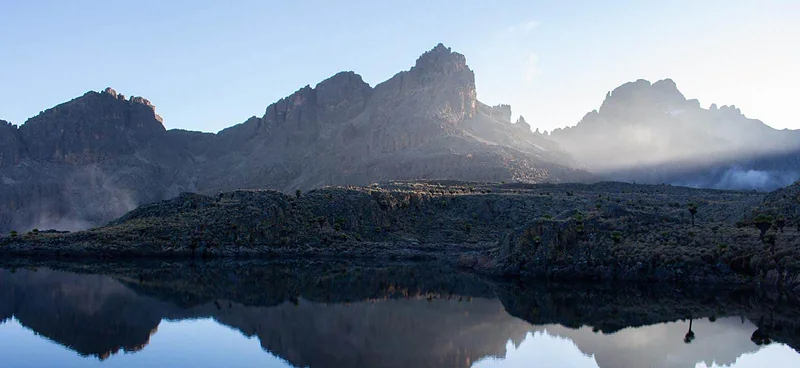
Mt Kenya Packing List
All mountain treks have a wide range of temperatures so the best clothing is a lot of thin layers. Such clothing is easier to adjust as the temperature fluctuates and is also more effective insulation than a few thick items of clothing.
Clothing, sleeping and carrying equipment
- Climbing gear – Harness, climbing boots, crampons, ice axe, warm sleeping bag, bivy bag (and light tent if climbing the North Face). These are for the summit attempts for Nelion and Batian.
- 50 litre day pack to carry on your ascent
- Duffle bag or soft kitbag for porters to carry on the mountain (not suitcases) with lock
- Waterproof bags of various sizes to protect equipment you want to ensure is dry (Do not use plastic. They are not permitted in Kenya).
- Adjustable walking sticks
- You need a minimum of 3 warm layers for the upper body for evenings and for summit day ascents. Many combinations of warm layers are possible with recent developments in outdoor clothing but we strongly recommend a good quality down jacket.
- Fleece jacket
- Warm gloves and a thin pair
- Sunglasses
- Sun hat
- Warm hat or balaclava
- Bandana or cap
- Breathable windproof and waterproof jacket
- Rain trousers
- Walking boots that are worn-in and have proven quality (leather strongly recommended)
- Thick socks and maybe also thin socks or sock liners to wear under the thick socks (this often helps to prevent blisters).
- Gaiters can be very helpful in wet conditions and to stop scree from getting inside your boots.
- T-shirts, preferably synthetic as cotton dries poorly and does not provide very good insulation.
- Underwear
- Trousers (loose and comfortable). One pair should be thick and warm.
- Thermal underwear is recommended for both upper and lower body if you feel the cold.
Personal Usage
- 2 x 1 litre water bottle or equivalent
- Towel and toiletries
- Favourite snacks. These are especially good for summit days.
- Head torch. Practical in camp and very necessary on the summit day. Remember to bring lots of batteries and to allow for evening reading.
- Camera and film or batteries
- Pocket knife (always handy to have!)
- Reading material and games/cards/MP3
Personal medical kit
We recommend that your packing list includes a personal medical kit for the most basic needs.
- Aspirin for headaches and mild pains. Aspirin is particularly good on the mountains because it also thins the blood, which helps acclimatization at altitude.
- Water purification tablets or system
- Blister kits or bandages
- Imodium for severe diarrhea
- Malaria tablets. Malaria is not a problem on high mountains but all mountain trips begin and end in malarial areas.
Symptoms of altitude sickness
Symptoms can appear within 1-2 hours although most often appear 6-10 hours after ascent and generally subside in 1-2 days as the body adjusts to altitude. They may reappear as you continue to go higher. Symptoms usually occur gradually and can be one or a combination of the following:
- Headache
- Loss of appetite
- Disturbed sleep or drowsiness
- Irritability
- Fatigue
- Nausea/vomiting
- Dizziness
- Swelling of hands, feet & face
If the body is unable to adjust to altitude these symptoms will persist and, if they are left untreated, altitude sickness may progress to High Altitude Cerebral Edema (HACE) or High Altitude Pulmonary Edema (HAPE). Both can be fatal if ignored.
Symptoms of HAPE (fluid on the lungs)
- Breathlessness
- A dry cough, developing to a wet one with blood-tinged discharge or saliva.
- Tightness in the chest & blueness/darkness of face, lips & tongue
- Low fever up to 38°C/100°F
- Severe fatigue, progressing to coma
Symptoms of HACE (fluid on the brain)
- Severe headache symptoms not relieved by painkillers or lying down
- Confusion, disorientation & drowsiness
- Nausea/vomiting
- Loss of balance or coordination
- Blurred or double vision/retinal hemorrhage
How to avoid Altitude Sickness (AMS)
Certain medical conditions (such as respiratory disease) or medications (such as sleeping pills) can increase the risk of altitude sickness – it is important that you inform your leader of any medical conditions or medications before ascending to altitude. You can help your body to acclimatize and avoid altitude sickness by:
- Avoiding alcohol, tobacco and substances that can interfere with good delivery of oxygen to the body or cause dehydration.
- Eating small, frequent meals high in carbohydrates.
- Drinking plenty of water – at least 4 litres per day
- Taking it easy or have a rest. Walk at a slower pace than you would at sea level and avoid overexertion.
- Check with your health care provider to see if Diamox would be appropriate for you to take while climbing. See below.
- If possible, don’t fly or drive to high altitude. Start below 10,000 feet (3,048 meters) and walk up. If you do fly or drive, do not over-exert yourself or move higher for the first 24 hours.
- Hike high and sleep low. You can climb more than 1,640 feet (500 meters) in a day as long as you come back down and sleep at a lower altitude.
Treatment
Most travelers are able to successfully acclimatize by following the previously mentioned guidelines. However, there are instances where medical treatment is required. Ultimately, the best treatment for acute altitude sickness is to descend to a lower altitude. There may be times when your leader makes the decision that you or a member of your group is at risk of serious altitude sickness and for safety insists that you cannot ascend further – please respect that they are within their rights to do so and are making that decision in the best interests of your health and well-being. If you are experiencing any altitude sickness symptoms, we encourage you to discuss them with your leader straight away so you both can follow your acclimatization progress or seek the advice of a trained medical professional if necessary. Everyone will have a different perception of the severity of their symptoms, the key is to personally assess whether your symptoms are improving or worsening. If in doubt, go down!
Preventive Medication
Diamox (Acetazolamide) allows you to breathe faster so that you metabolize more oxygen, while high altitude climbing, thereby minimizing the symptoms caused by poor oxygenation. This is especially helpful at night when respiratory drive is decreased. Since it takes a while for Diamox to have an effect, it is advisable to start taking it 24 hours before you go to altitude and continue for at least five days at higher altitude. The recommendation of the Himalayan Rescue Association Medical Clinic is 125 mg. twice a day (morning and night). (The standard dose was 250 mg., but their research showed no difference for most people with the lower dose, although some individuals may need 250 mg.) Possible side effects include tingling of the lips and finger tips, blurring of vision, and alteration of taste. These side effects may be reduced with the 125 mg. dose. Side effects subside when the drug is stopped. Contact your physician for a prescription. Since Diamox is a sulfonamide drug, people who are allergic to sulfa drugs should not take Diamox. Diamox has also been known to cause severe allergic reactions to people with no previous history of Diamox or sulfa allergies. Frank Hubbell of SOLO recommends a trial course of the drug before going to a remote location where a severe allergic reaction could prove difficult to treat. It is very important that you make yourself aware of the cause and effects of traveling at altitude, monitor your health and seek assistance accordingly.
This information is general guidance only. Always talk to your doctor before taking any medication for altitude, and tell your guide about any medical conditions before the climb.